Prescribing Art as Medicine
U.S. communities are re-discovering that culture impacts health
NEWSMENTORSHIPMENTAL HEALTHRELATIONSHIPSART
James Davis
4/6/20262 min read
Feeling down is a natural part of life.
And it is a natural reaction to living in a modern society where phones, cars, and 24/7 breaking news straight to our frontal lobes is overriding instincts of community we evolved for hundreds of thousands of years as small groups of about 30 people foraging for berries.
When we feel sorrow or health issues of any kind, the modern reaction is to label it a pathology. Put it in a diagnostic manual. Prescribe an anti-depressant or statin. Take this, sit down, and fit in. Yet in Massachusetts and across the world, thought leaders are now asking a deeper question.
Can people with a mental or physical health issues find relief with art?
The answer is a resounding yes.
An analysis of 3,000 studies synthesized by researchers at the World Health Organization found that arts can have significant impact for improving health and well-being. One of these studies, which looked at the outcomes of 80 psychiatric patients in Greece, found that participants who were part of art activities experience "improved self-esteem, rediscovery of talents, reduced isolation, and enhanced emotional expression."
These findings (or shall we say re-findings for those of us who see this as a bit obvious) are starting to have a structural impact on arts funding. In Massachusetts, for example, the Mass Cultural Council now defines "Arts on Prescription" as "any program in which health- and social care providers are enabled to prescribe arts, culture, or nature experiences to patients or clients in order to support their health and well-being."
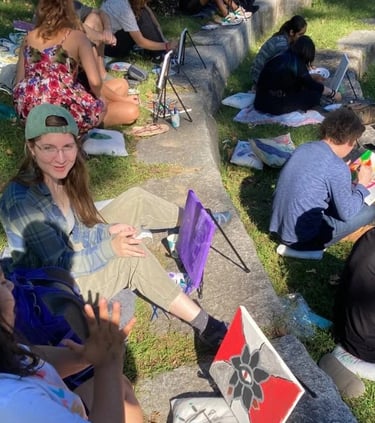
While a compliment to other evidence-based interventions, inviting people to engage together in the arts has other benefits. It brings people together. From discussing poetry to painting together, we get to relax, unwind, and express ourselves authentically in a way that the modern workplace or family dinner table often doesn't provide.
Former surgeon general Vivek Murthy classified loneliness as a health emergency in the United States with some studies purporting that for the one in five adults with serious feelings of loneliness their isolation is arguably worse than smoking.
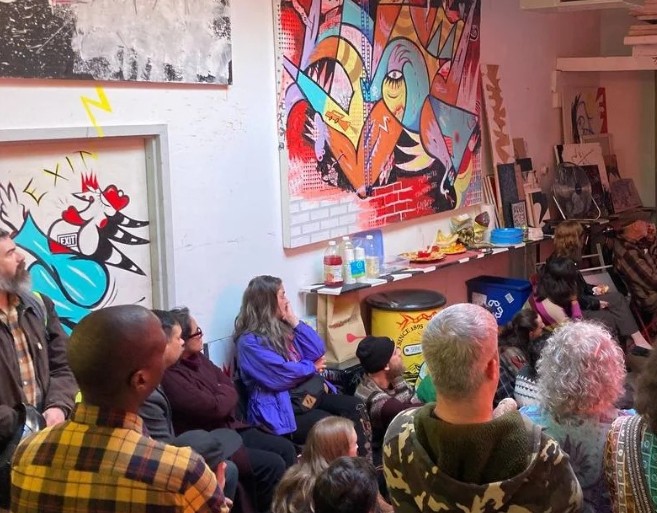
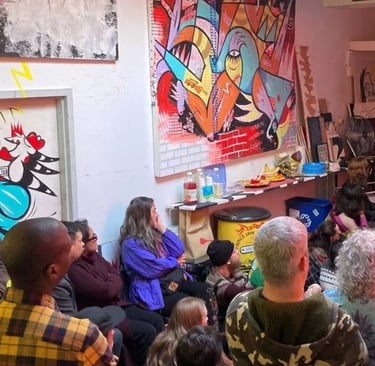
As a grassroots community that hosts nature forages, community art events, and festivals celebrating all things plants and mushrooms, we get to see the impact of this work first hand almost every weekend.
By walking the walk, we are taking this lesson to heart. Since we know this programming substantially improves outcomes, we should just make it happen.
Sorrow, joy, and all emotions are natural part of life.
Art and togetherness give them meaning.
Bay Staters for Creative Well-Being
Building healthful community through creative art and nature education
© 2026. All rights reserved. Bay Staters Incorporated, 501(c)3