How to Forage for Mushrooms
A guide to getting out in nature to study fungi in your community safely, curiously, and deliciously
NEWSNATUREAGRICULTUREGARDENINGCULTUREFOOD JUSTICEMYCOLOGY
James Davis
5/1/20265 min read
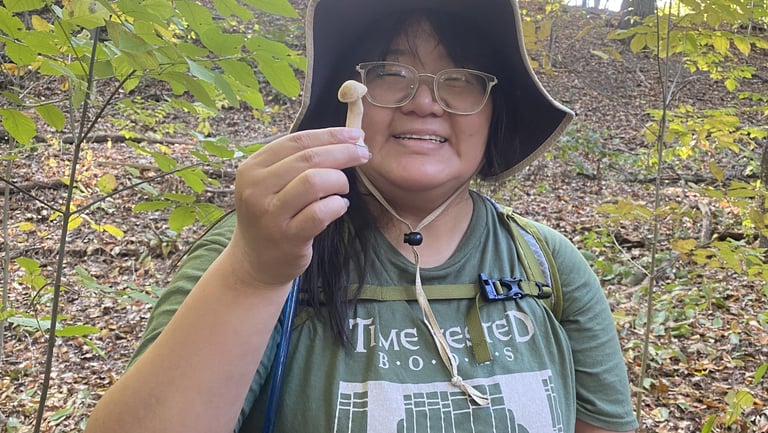
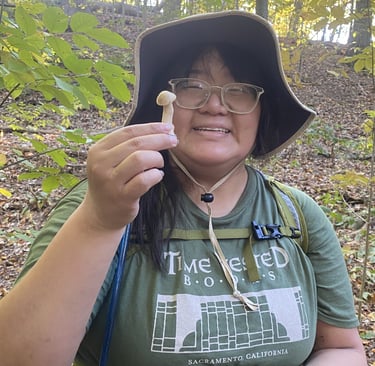
A Fun Activity: Not the Danger It’s Made Out to Be
Getting out in nature is great for our mental health, and when it is done with intention it can teach us quite a bit about the world around us. For three hundred thousand years, at least, our ancestors foraged for edible plants and fungi as a sustainable and readily available source of food before we had agriculture.
They also, presumably, learned a lot of lessons along the way by eating the wrong mushrooms: RIP. In fact, some of these formative negative experiences in our human story created an impulse known as “mycophobia,” or a fear of mushrooms. This deeply cultural phenomenon has many possible sources, from the possibility of English (or Anglo) cultures viewing foraging as a backwards, mainland European tradition following the nation’s war with Spain.
There are modern expressions of mycophobia that deter people from learning about foraging too. Many communities around the U.S. banned foraging for edible fungi because law enforcement worried people were looking for psychoactive fungi and they would not be able to tell the difference. A far more recent form of mycophobia manifests in localities assuming that foraging is bad for ecosystems, which provided you are not a major commercial operation is simply not true. The result is a patchwork of laws based enforced unevenly and unintelligently.
So don’t let fear stop you from venturing into the forest. Watch your step, leave brush and leaves undisturbed when possible, bring a friend, wear closed-toes shoes, check for ticks when you shower that night, and remember that food safety is a must. According to the CDC, 9 in 10 instances of mushroom poisoning in the U.S. come from people mispreparing perfectly edible varieties of fungi, including at restaurants. That is because mushrooms are effectively a form of cholesterol free meat fruit that will generate a film of bacteria if you leave them unrefrigerated for more than a couple hours.
So here’s the safety tips you need:
Bring a paper bag (less likely to harbor bacteria than plastic)
Wash what you find (bugs love mushrooms too)
Be 100% sure what you are eating is properly identified
Eat a small amount of mushrooms that are new to you at first (even store bought) so that your gut biome has a chance to adjust and you can assess any possible allergies.
Foraging for Local Fungi
Eating a handful of mushrooms a day can reduce your risk of cancer and heart disease by nearly 45%, according to a meta-analysis of studies published in the Journal of Advanced Nutrition. This is because mushrooms are effectively a cholesterol-free meat that are high in fiber and beta-glucans that nourish our gut bacteria.
Moreover, mushrooms want you to eat their flesh, making them a wonderfully ethical and sustainable food source. The actual organism that fruits them, known as mycelium, uses your foraging habits to spread their spores and reproduce in nature. Moreover, foraging mushrooms is completely sustainable. A 27-year study of foraging found no adverse impacts to removing species from ecosystems for personal use.
Here are three common, easy to identify mushrooms in the Northeast and their details. To learn more, we encourage you to join one of our community mushrooms walks. Remember to never eat any mushroom unless you are 100% sure of its identity and that you can always reach out to us ([email protected]) for help. Also remember to never leave mushrooms out unrefrigerated overnight or in a hot car for more than a couple of hours because it can lead to bacteria build-up.
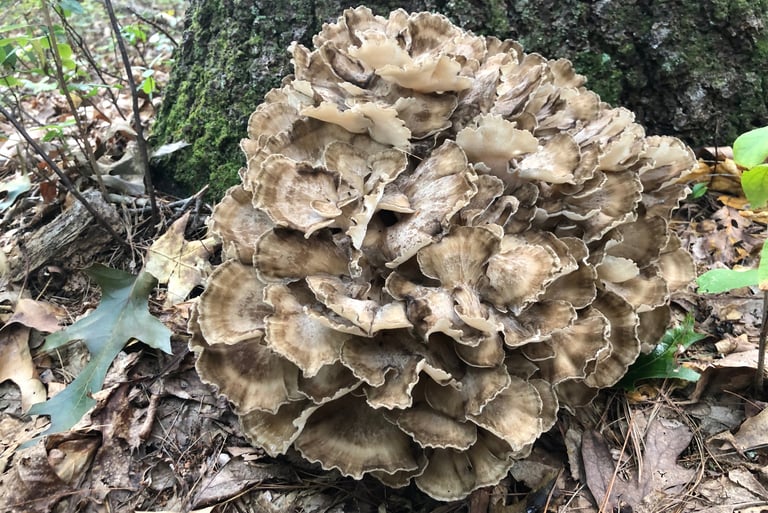
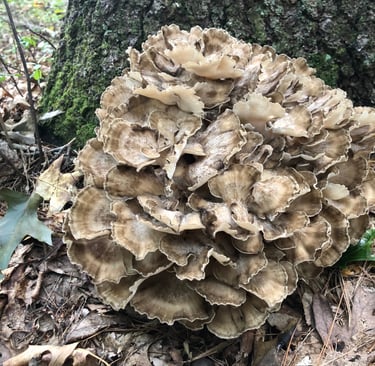
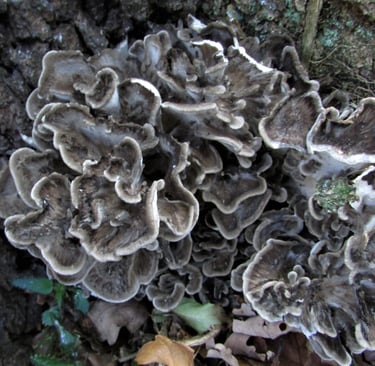
Hen of the Woods
Found Late August to October, usually at the base of oak trees, this mushroom is especially tasty and easy to identify (see below). Its caps are shaped a bit like feathers, emulating the look of a pheasant. To cook them, wash them thoroughly by rinsing them in your sink, lightly fry them in pan with a little oil of your choosing (we recommend olive oil or avacado oil for its health qualities) and seasoning (garlic salt works well) until they are dark brown and a little crunchy. Alternatively, soak them in a bowl of oil and seasoning overnight in your fridge, then bake them until crispy at 440 degrees farenheit for 15 to 20 minutes.
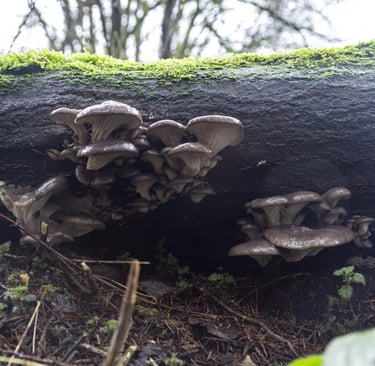
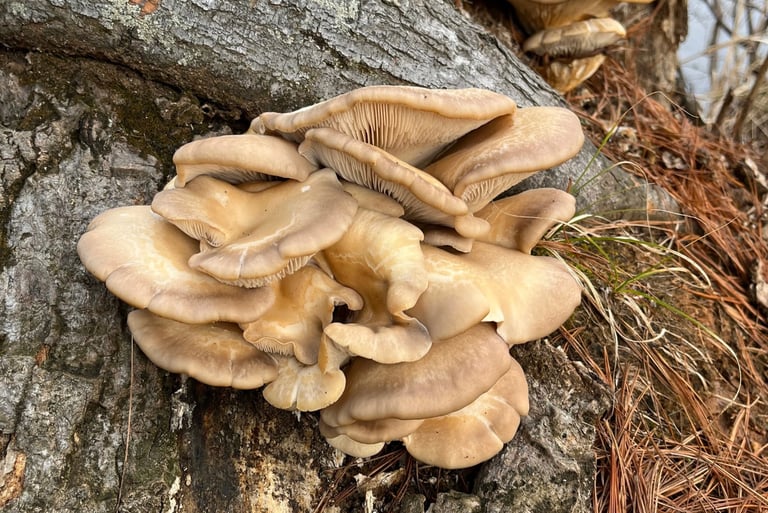
Oyster Mushrooms
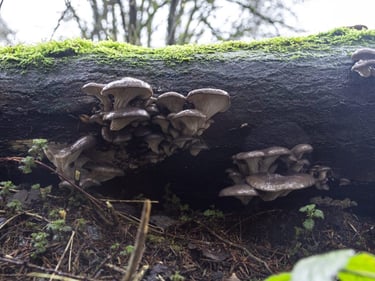
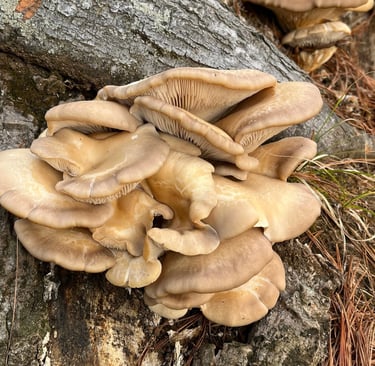
Found year-round in shelf-like clusters, usually growing out decaying hardwood logs on the ground, these mushrooms are a classic (see below). As with all foraged mushrooms, rinse them off thoroughly. Like Hen of the Woods, oysters taste great pan-fried, breaded, or soaked in marinades. Because they come in a wide variety of colors, including blue, grey, white, and yellow-brown in the wild it is easier to misidentify them. You may want to join one of our events to pick up one of our grow kits to practice cultivating them to familiarize yourself with their shape, texture, and flavor.
Turkey Tail
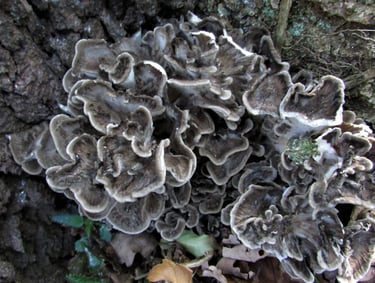
Found year-round on dead logs and stumps, turkey tail mushrooms are a common “adaptogenic” mushroom that is put in fancy mushroom coffees. To make your own tea that can promote better immune system health, simply pluck them and boil them in water continuously for 45 minutes or more. This continuous boiling is important so that the nutrients in the mushrooms actually leave the cell walls. This process can be repeated for other mushroom varieties, such as chaga.
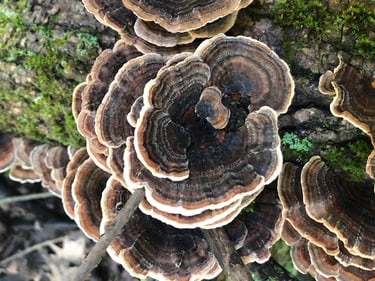
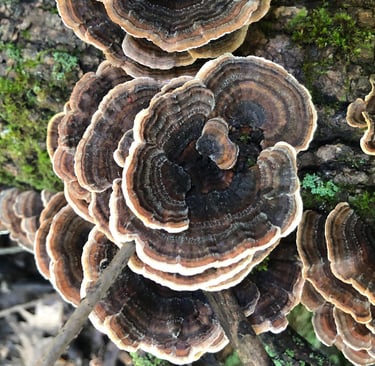
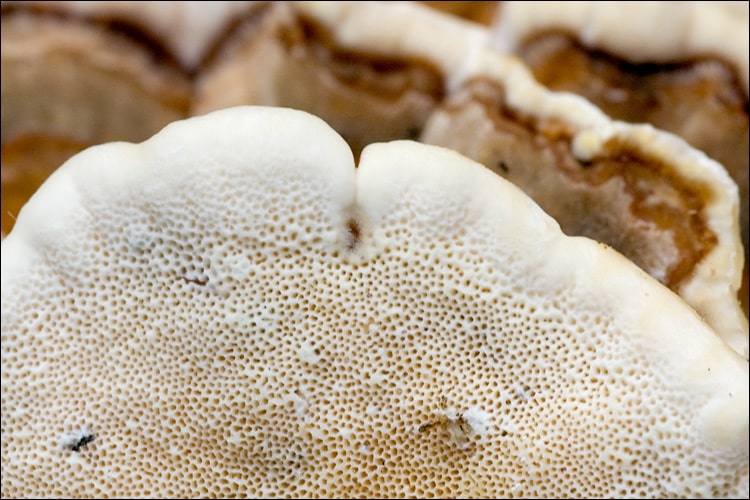
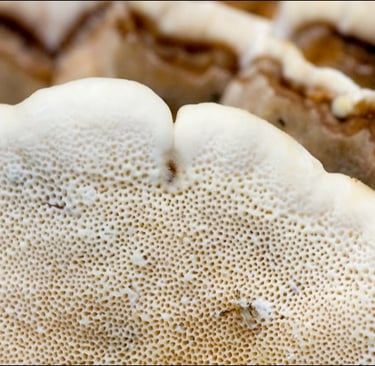
Turkey tail can come in a huge number of colors and patterns (see below for just one example), from oranges to blues to reds to browns. There are also mushrooms called “false turkey tail” and violet-tooth that have similar patterns. While these species are harmless for you to boil into tea, true turkey tail mushrooms have pores (see below) underneath their cap vs. spines (as in the case of violet tooth) or a flat surface (in the case of false turkey tail).
Bay Staters for Creative Well-Being
Building healthful community through creative art and nature education
© 2026. All rights reserved. Bay Staters Incorporated, 501(c)3